
Success Synonyms: 24 Words for Wins and Big Results
Success can mean reaching a goal, gaining wealth, or becoming well known. The right synonym helps readers understand exactly what kind of success you mean.
Quick Answer
Use achievement for a goal reached through effort.
Use accomplishment for a finished result.
Use triumph for a hard-won victory.
Choose prosperity for lasting wealth.
Choose hit for something popular.
Choose winner for a successful person.
What Does Success Mean?
Success has three main meanings in the Oxford Learner’s Dictionary:
Achieving something you wanted: Success can mean reaching a goal or getting something you worked toward.
Becoming rich or famous: It can describe gaining wealth, fame, or a high social position.
A person or thing that succeeds: A successful person, product, event, or project can be called a success.
These meanings are related, but they are not interchangeable. A business can achieve success without becoming famous. A popular film can be a success even if its creators do not become wealthy.
Merriam-Webster also gives senses connected to the degree of succeeding, a favorable result, and the attainment of wealth or status.
The Success Word Family
The word family includes four common forms:
| Word | Part of speech | Example |
|---|---|---|
| Success | Noun | Her success came after years of practice. |
| Succeed | Verb | The team hopes to succeed this season. |
| Successful | Adjective | It was a successful launch. |
| Successfully | Adverb | They successfully finished the project. |
Use success as a noun. Use succeed when you need a verb.
Correct: The plan succeeded.
Incorrect: The plan successed.
Conquer, exceeded, surpassed, optimized, and cultivated are verbs that cannot replace the noun success: “Exceeded sales targets by 30%” works in a bullet point, but “The launch was a conquer” is wrong.
Luck is chance, not a result; skill is the ability, not the result; and progress is movement toward a goal, not the goal reached, so none of them is a synonym for success.
Is Success Countable or Uncountable?
Success is usually uncountable when it means a general state or result.
She has enjoyed much success in her career.
The project met with little success.
Their success took years of work.
Use the plural successes when you mean separate achievements or successful events.
Her daughter’s successes made the family proud.
The company celebrated one of its biggest successes.
How Do You Spell Success?
The correct spelling is success, with two c’s and two s’s. Wrong spelling: “sucess”.
When to Use Success Synonyms
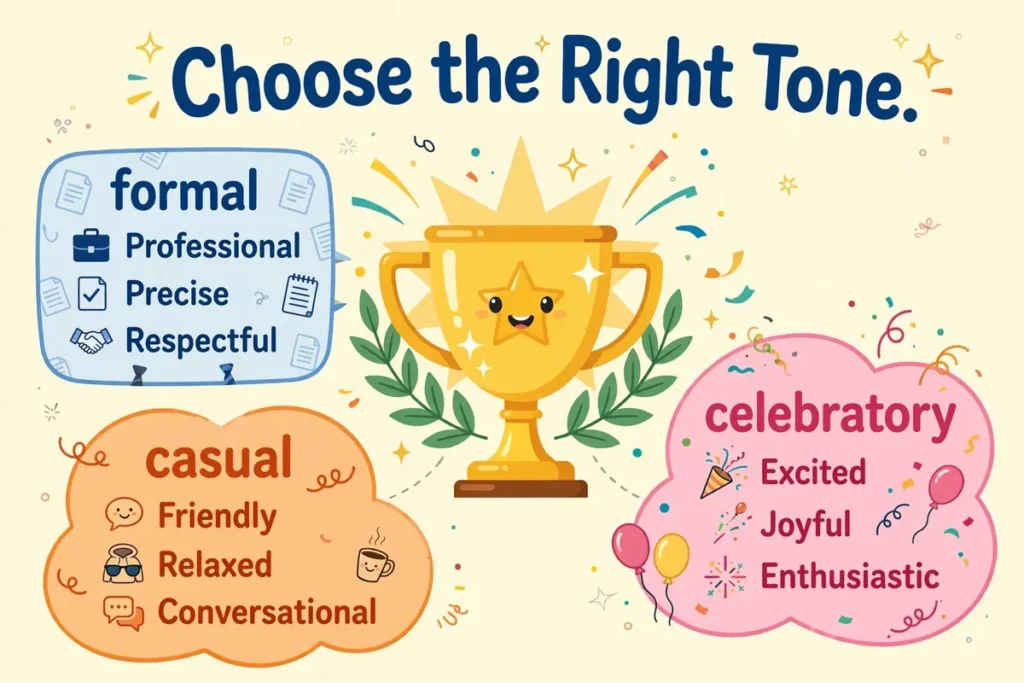
Choose a synonym that fits the result, audience, and setting.
For resumes and job applications: Use achievement, accomplishment, or attainment when describing a goal you reached.
For reports and formal writing: Use culmination, fruition, or attainment when discussing a finished project or long process.
For everyday conversation: Use win or hit when the context is casual.
For stories and speeches: Use triumph, breakthrough, or milestone when the result followed a challenge or marked a major stage.
Sometimes success is still the clearest choice. Keep it when you mean a person’s overall career, a business’s general performance, or a broad positive outcome. A narrower synonym may change the meaning.
Benefits of Using Success Synonyms
Using different words can make your writing clearer and less repetitive.
Avoid repetition. A paragraph with success in every sentence can sound dull. A fitting alternative gives each sentence a fresh shape.
Match the setting. Achievement suits a resume, while win sounds natural in casual conversation.
Name the result. Prosperity points to wealth. Recognition points to acknowledgment. Triumph suggests a difficult win.
Use the right grammar. Knowing the difference between a noun and a verb helps you build accurate sentences.
24 Best Success Synonyms at a Glance
These 24 words cover four meanings: goals reached, wealth and status, successful people or things, and major turning points.
| Synonym | Tone | Best for |
|---|---|---|
| Achievement | Neutral, formal | Resumes, reports, school essays |
| Accomplishment | Neutral, formal | Resumes, annual reports, formal writing |
| Triumph | Positive, celebratory | Speeches, stories, congratulatory messages |
| Victory | Neutral, energetic | Sports, elections, sales, negotiations |
| Win | Casual, everyday | Everyday talk, sports, short updates |
| Attainment | Formal, academic | Academic writing, certificates, formal reports |
| Realization | Formal, thoughtful | Tech, research, project reports |
| Completion | Neutral, factual | Project updates, reports, checklists |
| Prosperity | Positive, formal | Business writing, speeches, economics |
| Fortune | Neutral, formal | Stories, business writing, formal writing |
| Wealth | Neutral | Business, economics, formal writing |
| Fame | Neutral | Media, biographies, entertainment |
| Eminence | Very formal, rare | Academic writing, formal biographies |
| Recognition | Neutral, formal | Workplaces, awards, professional writing |
| Hit | Casual, informal | Entertainment, everyday talk, reviews |
| Winner | Casual, everyday | Sports, competitions, everyday talk |
| Sensation | Casual, exciting | Entertainment, media, everyday talk |
| Star | Casual, everyday | Entertainment, sports, everyday talk |
| Best-seller | Neutral, business | Publishing, business, shops |
| Breakthrough | Positive, exciting | Research, tech, problem-solving |
| Milestone | Neutral, business | Project updates, careers, life events |
| Culmination | Formal, literary | Speeches, essays, formal writing |
| Fruition | Formal, literary | Formal writing, speeches, essays |
| Coup | Formal, impressive | Business, politics, journalism |
Synonyms for Achievement and Results
These eight words describe goals, tasks, and results. They do not all carry the same level of effort or emotion.
1. Achievement
Tone: Neutral, formal · Uses: Resumes, reports, school essays
Meaning: Something important or worthwhile that you reach through effort or skill.
Explanation: Achievement is the closest all-round substitute for success when you mean one goal reached. It usually describes a specific result, not an entire career or a person’s overall position.
Examples:
- Completing the nursing program was her proudest achievement.
- The team’s achievement earned praise from the school principal.
2. Accomplishment
Tone: Neutral, formal · Uses: Resumes, annual reports, formal writing
Meaning: Something you have finished or done well through effort.
Explanation: Accomplishment puts more weight on the finished result and often sounds slightly more formal than achievement. It works well for completed projects, but it does not always suggest a major personal milestone.
Examples:
- Publishing her first novel was a major accomplishment.
- The new community center is an impressive accomplishment for the town.
3. Triumph
Tone: Positive, celebratory · Uses: Speeches, stories, congratulatory messages
Meaning: A great success after a struggle or serious difficulty.
Explanation: Triumph is stronger and more emotional than success. Use it when someone overcomes a real challenge, not for every routine win or ordinary completed task.
Examples:
- Finishing the race after her injury was a personal triumph.
- The team’s final performance was a triumph over months of doubt.
4. Victory
Tone: Neutral, energetic · Uses: Sports, elections, sales, negotiations
Meaning: Success in a contest, conflict, or competition.
Explanation: Victory usually involves an opponent, rival, or clear contest. It does not fit every personal goal, especially when no one else is competing against you.
Examples:
- The team’s victory sent them to the state final.
- Her election victory followed a close campaign.
5. Win
Tone: Casual, everyday · Uses: Everyday talk, sports, short updates
Meaning: A successful result, especially in a contest or difficult situation.
Explanation: Win is the shortest and plainest casual substitute for success. It can also be a verb, as in “we win,” but the noun often needs an article, as in “a big win.”
Examples:
- Getting the client to renew was a big win for the team.
- Their first home win lifted everyone’s spirits.
6. Attainment
Tone: Formal, academic · Uses: Academic writing, certificates, formal reports
Meaning: The act of reaching a goal, level, or standard.
Explanation: Attainment sounds formal and can feel stiff in everyday conversation. It focuses on reaching something, rather than the pride or satisfaction that may follow.
Examples:
- The attainment of her degree took five years.
- The report tracks the attainment of each learning goal.
7. Realization
Tone: Formal, thoughtful · Uses: Tech, research, project reports
Meaning: The achievement or making real of a plan, goal, or possibility.
Explanation: Realization can also mean suddenly understanding something, as in “I had a sudden realization.” Use it as a synonym for success only when a goal or possibility becomes real.
Examples:
- The realization of the research team’s goal took years of testing.
- Their plan’s realization depended on steady support from the community.
8. Completion
Tone: Neutral, factual · Uses: Project updates, reports, checklists
Meaning: The act of finishing a task, project, or process.
Explanation: Completion means something has ended or been finished. It says nothing by itself about quality, so a completed project can still fail to meet its goals.
Examples:
- The completion of the bridge brought relief to local drivers.
- Project completion came two weeks ahead of schedule.
Synonyms for Wealth, Fame and Standing
These six words describe financial comfort, public attention, or a person’s position over time. They do not simply mean one goal has been reached.
9. Prosperity
Tone: Positive, formal · Uses: Business writing, speeches, economics
Meaning: A state of financial well-being and continued growth.
Explanation: Prosperity describes ongoing wealth or economic well-being, not one successful event. A single sale may be a win, but it does not prove that a business is prosperous.
Examples:
- The town’s prosperity grew as new businesses opened.
- The family hoped to build lasting prosperity through careful planning.
10. Fortune
Tone: Neutral, formal · Uses: Stories, business writing, formal writing
Meaning: Great wealth or a favorable turn of events.
Explanation: Fortune has two common meanings: wealth and luck. “He made his fortune” refers to money, while “by good fortune” refers to luck, so check the context.
Examples:
- She built her fortune through years of hard work.
- His good fortune began with one unexpected opportunity.
11. Wealth
Tone: Neutral · Uses: Business, economics, formal writing
Meaning: A large amount of money, property, or valuable resources.
Explanation: Wealth covers only the financial side of success. A wealthy person is not automatically successful in every part of life, such as relationships, health, or personal goals.
Examples:
- Her wealth came from a business she started at home.
- The report examines how wealth is shared across the region.
12. Fame
Tone: Neutral · Uses: Media, biographies, entertainment
Meaning: The state of being widely known by the public.
Explanation: Fame is often a result of success, not the achievement itself. It can also come from scandal or controversy, so being famous does not always mean someone has done well.
Examples:
- The actor found fame after her first major film.
- Fame brought attention to the charity’s work.
13. Eminence
Tone: Very formal, rare · Uses: Academic writing, formal biographies
Meaning: A respected or distinguished position in a field or society.
Explanation: Eminence describes high standing and respect, often earned over many years. It is very formal, rare, and old-fashioned in everyday writing, where standing or reputation may sound more natural.
Examples:
- Her eminence in medical research drew visitors from abroad.
- The historian gained eminence through decades of careful scholarship.
14. Recognition
Tone: Neutral, formal · Uses: Workplaces, awards, professional writing
Meaning: Public or official acknowledgment of someone’s work, skill, or contribution.
Explanation: Recognition means that others notice or acknowledge an effort or contribution. It is not the achievement itself, and people can receive recognition for effort even when the final result is not a success.
Examples:
- Her research earned recognition from the national science group.
- The award gave the volunteers recognition for their service.
Synonyms for a Successful Person or Thing
These words describe a person, product, show, or other thing that has done well or become popular. They do not name the result itself.
15. Hit
Tone: Casual, informal · Uses: Entertainment, everyday talk, reviews
Meaning: Something that becomes very popular or well received.
Explanation: Hit is an informal word for a popular thing, such as a song, film, show, or product. It does not usually describe a person’s whole career or a business result.
Examples:
- The new comedy became a hit with local audiences.
- Her latest song is already a radio hit.
16. Winner
Tone: Casual, everyday · Uses: Sports, competitions, everyday talk
Meaning: A person, team, or thing that succeeds or comes out on top.
Explanation: Winner refers to a person or thing, not the result itself. Say “a winner” when you mean someone who succeeds, and “a win” when you mean the result.
Examples:
- The young swimmer was a winner at her first national meet.
- That simple recipe is a winner at family gatherings.
17. Sensation
Tone: Casual, exciting · Uses: Entertainment, media, everyday talk
Meaning: A person or thing that attracts great public interest or excitement.
Explanation: Sensation suggests a strong public reaction, buzz, or excitement. It is stronger than hit, so it may sound exaggerated when something is merely popular.
Examples:
- The new game became a sensation among teenagers.
- Her first video was an online sensation.
18. Star
Tone: Casual, everyday · Uses: Entertainment, sports, everyday talk
Meaning: A famous or admired person who performs very well.
Explanation: Star describes the person, not the achievement. “She is a star” refers to her status or talent, while a phrase such as “her latest win” names a result.
Examples:
- The young chef became a star after the cooking contest.
- He was the team’s star throughout the season.
19. Best-seller
Tone: Neutral, business · Uses: Publishing, business, shops
Meaning: A book or other product that sells in very large numbers.
Explanation: Best-seller applies to things that sell well, such as books, records, or products. Never use it to describe a person or a project that does not have sales.
Examples:
- Her first cookbook became a best-seller within a month.
- The new guide is a best-seller at several local shops.
Synonyms for Breakthroughs and Big Moments
These five words describe major changes, stages, or turning points. Each one points to a different part of a longer process.
20. Breakthrough
Tone: Positive, exciting · Uses: Research, tech, problem-solving
Meaning: An important discovery or advance that removes a barrier or opens a new path.
Explanation: A breakthrough marks a turning point that makes further progress possible. It does not always mean the whole project is finished or that every goal has been reached.
Examples:
- The research team made a breakthrough in battery design.
- The new treatment was a breakthrough for patients with the condition.
21. Milestone
Tone: Neutral, business · Uses: Project updates, careers, life events
Meaning: An important stage or event in a longer process.
Explanation: A milestone marks progress along the way, not necessarily the final result. Reaching one can be a success, but it does not mean the entire project or journey is complete.
Examples:
- Opening the second office was a milestone for the company.
- Her tenth year in teaching marked a career milestone.
22. Culmination
Tone: Formal, literary · Uses: Speeches, essays, formal writing
Meaning: The highest point or final result of a long process.
Explanation: Culmination describes the peak or end of sustained effort and sounds formal. It usually refers to the result of a series of events, not a small, isolated win.
Examples:
- The award was the culmination of years of careful research.
- Their final performance was the culmination of months of practice.
23. Fruition
Tone: Formal, literary · Uses: Formal writing, speeches, essays
Meaning: The point when a plan, hope, or idea becomes real.
Explanation: Fruition often appears in the fixed phrase “come to fruition.” It sounds formal and slow in everyday speech, and it rarely works as a simple standalone replacement for success.
Examples:
- Years of planning finally brought the project to fruition.
- Her dream of opening a school came to fruition last spring.
24. Coup
Tone: Formal, impressive · Uses: Business, politics, journalism
Meaning: A clever or unexpected action that brings a major advantage or success.
Explanation: Coup can describe an impressive achievement, such as securing a major deal. In everyday talk, use “clever win” instead. Coup also means a sudden takeover of a government, so never use it for a violent takeover sense.
Examples:
- Signing the rival company’s top designer was a major coup.
- The surprise partnership was a business coup for the small firm.

Success vs Achievement vs Accomplishment vs Triumph
These four words overlap, but each has a different focus.
| Word | Core idea | What it covers | Best for | Example |
|---|---|---|---|---|
| Success | The good result itself, or state of having it | Whole outcome, one goal, career, or life | General writing, any context | Her success in business took ten years. |
| Achievement | One goal reached through effort and skill | Single, specific thing done well | Resumes, essays, reports | Passing the exam was her greatest achievement. |
| Accomplishment | Task completed well through effort | Finished result, slightly more formal | Resumes, annual reports, formal writing | The new bridge is a remarkable engineering accomplishment. |
| Triumph | Great win after hard struggle | Celebrated victory over difficulty | Speeches, stories, congratulations | The court verdict was a triumph for the victims. |
Success vs achievement
Every achievement is a success, but success often sums up many achievements together.
Achievement vs accomplishment
Achievement stresses effort and skill. Accomplishment stresses the finished result and is slightly more formal.
if you mean one thing done well, use “achievement”; if you mean the finished result in formal writing, use “accomplishment”; if the win came after a real struggle, use “triumph”; if you mean the whole picture, keep “success”.
Other Ways to Say “Success”
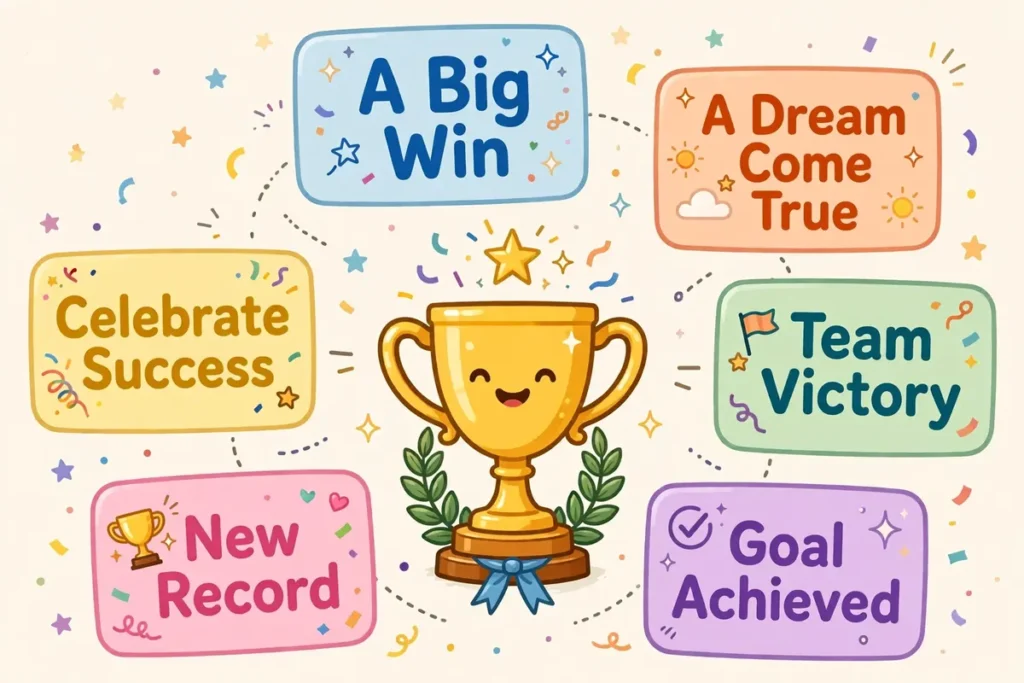
These six phrases offer natural alternatives in conversation and writing. Choose one that fits the situation instead of using every phrase as a direct substitute.
1. A Roaring Success
Meaning: A very great success that receives a strong response.
Example: The opening night was a roaring success.
2. A Feather in One’s Cap
Meaning: An achievement that someone can feel proud of.
Example: The award was a feather in her cap.
3. A Big Win
Meaning: A clear, valuable success in everyday language.
Example: The contract was a big win for the team.
4. A Dream Come True
Meaning: A long-held hope or wish that has finally happened.
Example: Getting the scholarship was a dream come true.
5. A Success Story
Meaning: A person, group, or business known for doing well.
Example: She became a local success story.
6. A Box-Office Success
Meaning: A film or show that earns a lot of money from ticket sales.
Example: The film was a box-office success.
Other informal alternatives include smash, blockbuster, and megahit. Near-synonyms such as fulfillment and advancement can fit some contexts, but they do not mean exactly the same thing.
Antonyms of Success
The direct opposite of success is failure. The other words below describe specific kinds of failure or disappointment.
The direct opposite
- Failure: A lack of success when a goal, plan, or attempt does not work.
Opposites for particular senses
- Defeat: Losing a contest, battle, election, or competition.
- Flop: An informal word for a film, show, product, or event that does poorly.
- Setback: A problem or delay that makes progress harder. A setback does not always end a person’s chance of success.
- Loss: An unsuccessful result in a game, financial matter, or missed opportunity.
- Disappointment: The feeling that follows when a hoped-for result does not happen.
Narrower opposites
Two other words fit narrower situations. Bankruptcy is an opposite in the financial sense, while fiasco is an informal word for a major public failure.
FAQs
Frequently Asked Questions
1. What is another word for success?
Achievement is the closest general synonym when you mean one goal reached through effort. Accomplishment works well for a finished result, while triumph suggests a major win after difficulty. Choose the word that fits the situation.
2. What is the difference between success and achievement?
Achievement usually means one specific goal reached through effort or skill. Success is broader: it can describe that result, a career, or a person’s overall position. Several achievements can contribute to long-term success.
3. What is the difference between achievement and accomplishment?
Achievement puts more weight on the effort or skill used to reach a goal. Accomplishment puts more weight on the finished result and often sounds slightly more formal. Both can describe something done well.
4. What is the opposite of success?
Failure is the direct opposite of success when a goal or plan does not work. Defeat fits a contest, flop fits an unsuccessful show or product, and setback describes a delay or problem.
5. What is a good synonym for success on a resume?
Achievement and accomplishment are strong resume nouns because they point to results you delivered. Add details or figures to show the impact. For example, describe the achievement, then state how it helped the team.
6. Is success a noun or a verb?
Success is a noun. Succeed is the verb, successful is the adjective, and successfully is the adverb. You can write, “The plan succeeded,” but you cannot use success as the verb in that sentence.