
Significant Synonyms: 41 Words That Say What Matters
The word significant can describe something that matters, a large amount, or something that carries a message. The best replacement depends on which meaning you intend, so this guide separates all four senses, including the technical use in statistics.
Quick Answer
Important is the closest everyday replacement.
Substantial or considerable describes a large amount.
Meaningful or telling describes something full of meaning.
Momentous or pivotal describes an event that changes things.
The right word depends on the sentence. No single synonym works for every sense of significant.
What Does Significant Mean?
Significant is an adjective that describes something important, noticeable, large in amount, or full of meaning.
Oxford, Merriam-Webster, and American Heritage recognize several uses of the word. These meanings overlap, but they aren’t interchangeable.
There are four senses to understand:
Important: Something has enough value or effect to deserve attention. A significant decision can change someone’s future.
Large in amount: Something has a considerable size, number, or degree. A significant increase in costs describes a measurable change.
Full of meaning: Something communicates a message or carries a special meaning. A significant glance can reveal an unspoken feeling.
Statistically unlikely to be chance: In research, a statistically significant result meets a statistical test for evidence against a chance explanation, often using a p-value of 0.05 or lower.
The fourth meaning is technical. It has no everyday synonym. Never replace statistically significant with important or large. A result can be statistically significant without having much practical value.
Significant as an adjective
Use significant before a noun or after a linking verb.
The company reported a significant loss.
Her contribution was significant.
The study found a significant difference.
The adjective also has comparative and superlative forms:
- More significant
- Most significant
Significant and significantly
Don’t confuse the adjective with its adverb.
Wrong: Sales were significant higher.
Right: Sales were significantly higher.
Use significantly before an adjective or verb when describing the degree of a change. Use significant before a noun or after a linking verb.
The word family
| Word | Part of speech | Meaning |
|---|---|---|
| Significance | Noun | The importance or meaning of something |
| Significantly | Adverb | To a noticeable or meaningful degree |
| Signify | Verb | To mean or serve as a sign of something |
| Insignificant | Adjective | Too small or unimportant to deserve attention |
| Significant other | Noun phrase | A person’s romantic partner |
Pronunciation and spelling
The word has four syllables, with stress on the second:
sig-NIF-ih-kunt
The correct spelling is significant (sign-i-fi-cant).
Two common misspellings are:
- Signficant
- Significent
Both are incorrect.
Also, significant doesn’t mean famous or powerful. A famous singer isn’t automatically significant, and a powerful engine is strong, not necessarily important.
Big and huge are the most common weak swaps. They say size only and nothing about importance. Fatal and fateful mean causing death or doom, so never use them as significant swaps. Pregnant is the most confusing Merriam-Webster entry: a pregnant pause means full of meaning in the dictionary, but in everyday English pregnant means expecting a baby, so don’t use it. Earth-shattering, earthshaking, and tectonic are hyperbole and jargon, not everyday synonyms.
When to Use Significant Synonyms
Choose a replacement based on the situation and the meaning you want to express. The same word won’t fit an academic paper, a business email, and a personal conversation equally well.
In essays and reports
Formal writing often needs words that explain the type of effect or evidence being discussed.
Consequential: For decisions that lead to important results.
Material: For facts that could affect a legal or business decision.
Marked: For clear changes in data or performance.
For example, instead of writing “The report found a significant difference,” explain whether the difference was marked, measurable, or likely to affect the conclusion.
In business emails
Business communication often deals with money, plans, results, and responsibilities.
Key: For a central part of a plan.
Substantial: For a measurable amount.
Considerable: For a fairly large degree of effort, time, or money.
For example, “We made a substantial investment in new equipment” tells readers more than a general claim about a significant investment.
In everyday conversation
Simple words usually sound more natural in daily speech.
Important: For something that deserves attention.
Major: For something large or serious in scale.
Serious: For a problem or situation that needs careful thought.
You might say, “This is an important decision,” rather than choosing a formal word that sounds unnatural.
In stories and descriptions
Writers often need words that reveal feelings, messages, or hidden details.
Meaningful: For something with personal value.
Telling: For a detail that reveals something.
Revealing: For information that exposes what was hidden.
For example, a character’s silence might be telling because it reveals more than a spoken answer.
The vague-filler warning
“A significant improvement” doesn’t tell readers how much improvement occurred.
Replace it with a figure or a more exact description:
- “An 18% increase”
- “A substantial rise in costs”
- “A marked improvement in test scores”
Numbers give readers something they can understand and compare.
Keep significant when you mean a combination of importance, amount, and meaning. Also keep it in the technical phrase statistically significant when describing a properly tested research result.
Benefits of Using Significant Synonyms
Using a more exact word makes your writing easier to understand. It also helps readers see what makes a person, event, result, or decision matter.
Here are five reasons to choose a suitable alternative.
Avoid repeating the same word
Repeating significant in every paragraph can make an article or report sound dull. Words such as important, major, and meaningful give you more choices.
Choose each replacement according to the sentence rather than swapping words at random.
Explain how something matters
A single adjective can leave too much room for interpretation.
Important explains value.
Substantial explains amount.
Meaningful explains a message or personal value.
Momentous describes an event with lasting effects.
These distinctions help readers understand your point.
Make measurable claims clearer
A word like substantial can work well when discussing money, sales, time, or research measurements.
For example, “The business recorded a substantial increase in sales” describes the scale of a change more clearly than a vague statement.
A percentage or exact figure can make the claim clearer still.
Match your tone to the situation
Some alternatives work well in formal reports, while others suit conversations.
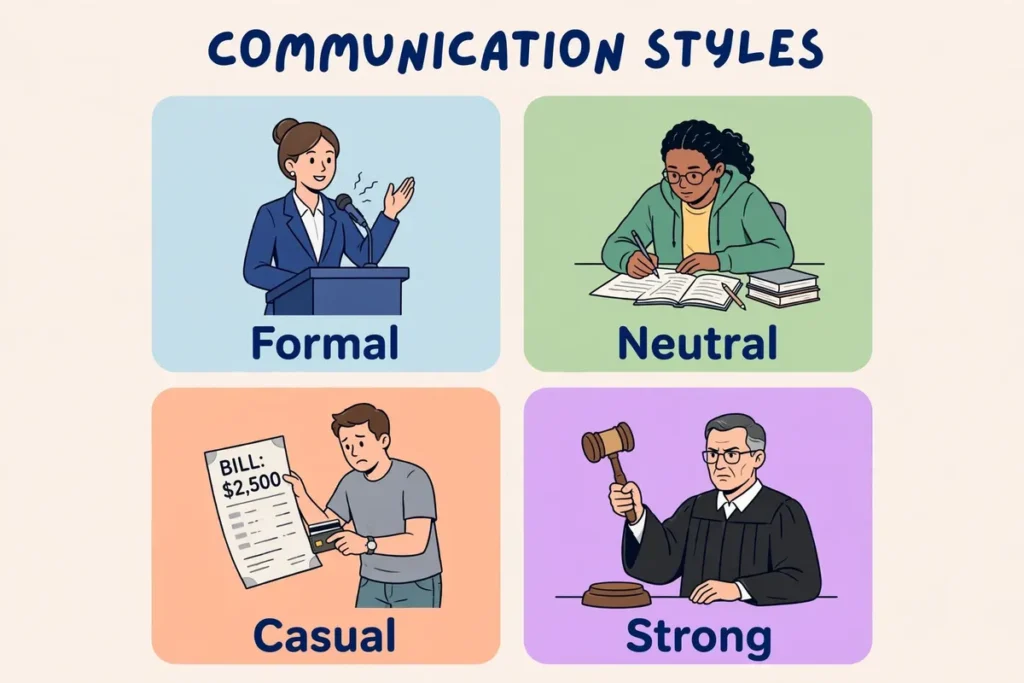
Formal: consequential, material, momentous.
Neutral: important, major, serious.
Casual: hefty, sizable.
A natural tone helps your message sound appropriate.
Use the correct word form
Synonyms won’t fix a grammar mistake if you choose the wrong part of speech.
Use significant as an adjective and significantly as an adverb.
For example, write “The figures were significantly higher,” not “The figures were significant higher.”
41 Best Significant Synonyms at a Glance
The 41 words below cover five different uses.
11 describe importance.
10 describe a large amount.
8 describe meaning.
7 describe turning points.
5 describe weight and seriousness.
Some words carry a much stronger claim than others. Momentous, vital, crucial, paramount, and monumental should only describe situations that genuinely justify their force.
| Synonym | Tone | Best for |
|---|---|---|
| Important | Neutral, everyday | Everyday talk, emails, essays, the closest general match |
| Major | Neutral, everyday | News, business, decisions, events |
| Key | Neutral, business | Business, teamwork, plans, reports |
| Notable | Neutral to formal | Reports, reviews, museums, achievements |
| Noteworthy | Neutral to formal | Reports, essays, formal writing |
| Momentous | Formal, strong | History, votes, treaties, life events |
| Consequential | Formal | Courts, decisions, policy, analysis |
| Vital | Formal, strong | Health, safety, decisions, plans |
| Crucial | Formal, strong | Decisions, turning points, exams, safety |
| Essential | Neutral to formal | Essays, business, everyday formal writing |
| Paramount | Formal, strong | Formal writing, speeches, policy |
| Substantial | Formal, business | Money, sales, investments, research results |
| Considerable | Neutral to formal | Effort, time, money, influence |
| Sizable | Neutral, everyday | Donations, sums, crowds, portions |
| Marked | Neutral to formal | Data, improvement, change, difference |
| Pronounced | Formal | Trends, patterns, effects, contrasts |
| Appreciable | Formal, technical | Research, science, formal reports |
| Hefty | Casual, everyday | Prices, fines, portions, sums |
| Ample | Neutral, formal | Time, space, evidence, supplies |
| Extensive | Neutral to formal | Research, damage, knowledge, networks |
| Large | Neutral, everyday | Everyday talk, simple sentences |
| Meaningful | Warm, positive | Conversations, work, gifts, relationships |
| Telling | Neutral, slightly literary | Details, silences, looks, small signs |
| Expressive | Neutral to positive | Faces, art, dance, voices |
| Eloquent | Formal, literary | Pauses, speeches, gestures, writing |
| Indicative | Formal | Data, budgets, signs, behavior |
| Suggestive | Neutral to formal | Looks, winks, remarks, smiles |
| Revealing | Neutral | Interviews, details, answers, photos |
| Symbolic | Neutral to formal | Flags, gestures, ceremonies, gifts |
| Pivotal | Formal, business | Decisions, moments, meetings, roles |
| Decisive | Formal | Battles, votes, goals, arguments |
| Historic | Formal | Events, days, treaties, speeches |
| Monumental | Formal, strong | Achievements, changes, buildings, errors |
| Far-reaching | Formal | Decisions, policies, consequences, reforms |
| Groundbreaking | Neutral to formal | Research, ideas, inventions, books |
| Influential | Neutral to formal | People, books, leaders, ideas |
| Weighty | Formal | Decisions, matters, evidence, arguments |
| Serious | Neutral, everyday | Problems, talks, situations, warnings |
| Material | Formal, business | Money, law, business, contracts |
| Prominent | Neutral to formal | People, places, roles, features |
| Remarkable | Neutral, positive | Achievements, recoveries, talent, results |
Important Synonyms for Significant
These 11 words describe importance, value, or an effect that deserves attention. They are useful when you mean that something matters rather than simply being large.
1. Important
Tone: Neutral, everyday · Uses: Everyday talk, emails, essays, the closest general match.
Meaning: Having great value or effect; worth attention.
Explanation: Important is the plainest everyday replacement for significant. It describes value or effect, not physical size or a large amount.
Examples:
- Education plays an important role in a child’s development.
- This is an important decision for the entire team.
2. Major
Tone: Neutral, everyday · Uses: News, business, decisions, events.
Meaning: Large or serious in scale; one of the main ones.
Explanation: Major describes something that has importance and considerable scale. A major problem is a big one, not simply a serious concern.
Examples:
- The company announced a major change to its business plan.
- Winning the final was a major achievement for the team.
3. Key
Tone: Neutral, business · Uses: Business, teamwork, plans, reports.
Meaning: Most important and essential to success.
Explanation: Key describes something central to a plan or successful result. It needs something it unlocks, so “a key part of the plan” works better than calling an event a key one without context.
Examples:
- Communication is a key part of successful teamwork.
- The report identified three key reasons for the delay.
4. Notable
Tone: Neutral to formal · Uses: Reports, reviews, museums, achievements.
Meaning: Worth attention because it stands out.
Explanation: Notable describes something that attracts attention because it stands out. It stresses noticeability more than impact, so a notable detail doesn’t have to change anything.
Examples:
- The museum has a notable collection of local artwork.
- One notable feature of the building is its glass roof.
5. Noteworthy
Tone: Neutral to formal · Uses: Reports, essays, formal writing.
Meaning: Worth noting; deserving of attention.
Explanation: Noteworthy is almost identical to notable. Pick one and stay consistent instead of using both repeatedly to describe the same kind of detail.
Examples:
- The report contains several noteworthy findings.
- Her noteworthy contribution helped the project succeed.
6. Momentous
Tone: Formal, strong · Uses: History, votes, treaties, life events.
Meaning: Of great importance, with serious lasting effects.
Explanation: Momentous is one of the strongest words in this group. Reserve it for events that truly change things or leave lasting effects, not ordinary achievements.
Examples:
- The signing of the treaty was a momentous event.
- Their wedding marked a momentous day in both families’ lives.
7. Consequential
Tone: Formal · Uses: Courts, decisions, policy, analysis.
Meaning: Likely to lead to important results.
Explanation: Consequential focuses on the results of an action or decision. It works well when the effects matter more than the event itself.
Examples:
- The court faced a consequential decision about the new law.
- Their agreement had several consequential effects on the business.
8. Vital
Tone: Formal, strong · Uses: Health, safety, decisions, plans.
Meaning: Absolutely necessary; essential for life or success.
Explanation: Vital is stronger than significant because it means essential, not just important. Use it when something is necessary for safety, survival, or success.
Examples:
- Clean drinking water is vital for human health.
- Accurate records are vital to the success of the investigation.
9. Crucial
Tone: Formal, strong · Uses: Decisions, turning points, exams, safety.
Meaning: Of great importance; necessary for success.
Explanation: Crucial is stronger than significant and describes something success depends on. Don’t use it for a minor detail that has little effect on the final result.
Examples:
- Good preparation is crucial for passing the final exam.
- The final vote played a crucial role in the decision.
10. Essential
Tone: Neutral to formal · Uses: Essays, business, everyday formal writing.
Meaning: Absolutely necessary; cannot do without.
Explanation: Essential means necessary, not simply important. An essential tool is one you need to complete a task, rather than one you merely admire.
Examples:
- Clear instructions are essential for new employees.
- Regular practice is essential for learning a new language.
11. Paramount
Tone: Formal, strong · Uses: Formal writing, speeches, policy.
Meaning: More important than anything else; supreme.
Explanation: Paramount places something at the very top of an importance scale. It is an unusually strong choice, so don’t use it for ordinary priorities or small everyday matters.
Examples:
- Public safety remains paramount during the construction work.
- Protecting customer information is paramount to the company.
Synonyms for a Large Amount
These 10 words describe amount, size, degree, or range. They are not replacements for significant when you mean that something matters or has lasting effects.
12. Substantial
Tone: Formal, business · Uses: Money, sales, investments, research results.
Meaning: Large in amount, degree or value.
Explanation: Substantial is one of the best choices when significant describes a measurable amount. It needs evidence behind the claim, such as a figure, comparison, or clear change.
Examples:
- The company made a substantial investment in new equipment.
- The repairs required a substantial amount of money.
13. Considerable
Tone: Neutral to formal · Uses: Effort, time, money, influence.
Meaning: Fairly large in amount or degree.
Explanation: Considerable describes an amount or degree that deserves attention. It sounds slightly more measured than substantial, making it useful when you don’t want to overstate a claim.
Examples:
- The team spent considerable time preparing the presentation.
- Building the new office required considerable effort.
14. Sizable
Tone: Neutral, everyday · Uses: Donations, sums, crowds, portions.
Meaning: Fairly large in size or amount.
Explanation: Sizable is an everyday way to describe a large amount or physical size. It doesn’t describe abstract importance, so choose another word when value or effect is your main point.
Examples:
- The charity received a sizable donation from a local business.
- A sizable crowd gathered outside the stadium.
15. Marked
Tone: Neutral to formal · Uses: Data, improvement, change, difference.
Meaning: Clearly noticeable; easy to see.
Explanation: Marked works well with words such as improvement, change, and difference. It describes a noticeable amount or degree, not the personal value of someone or an event.
Examples:
- The new training program led to a marked improvement in performance.
- The figures show a marked difference between the two years.
16. Pronounced
Tone: Formal · Uses: Trends, patterns, effects, contrasts.
Meaning: Especially noticeable; easy to spot.
Explanation: Pronounced describes an amount or feature that stands out clearly. It’s stronger than marked, so it works well when a trend or contrast is easy to see in the data.
Examples:
- The survey showed a pronounced change in customer habits.
- There was a pronounced difference between the two results.
17. Appreciable
Tone: Formal, technical · Uses: Research, science, formal reports.
Meaning: Large enough to be noticed or measured.
Explanation: Appreciable describes an amount or difference that can be noticed or measured. It often appears in negative sentences, such as “no appreciable difference,” when a change is too small to detect.
Examples:
- The new system produced an appreciable improvement in efficiency.
- Researchers found no appreciable difference between the samples.
18. Hefty
Tone: Casual, everyday · Uses: Prices, fines, portions, sums.
Meaning: Large and heavy; a big amount.
Explanation: Hefty is a casual word for a large amount, cost, or physical weight. It sounds too informal for most academic and business reports.
Examples:
- The restaurant charged a hefty price for the meal.
- The driver received a hefty fine for speeding.
19. Ample
Tone: Neutral, formal · Uses: Time, space, evidence, supplies.
Meaning: More than enough; plenty.
Explanation: Ample describes an amount that is sufficient with some left over. It stresses having enough rather than simply being large, so an ample supply can meet a need comfortably.
Examples:
- We have ample time to finish the project.
- The investigators collected ample evidence before making a decision.
20. Extensive
Tone: Neutral to formal · Uses: Research, damage, knowledge, networks.
Meaning: Large in amount or range; covering a lot.
Explanation: Extensive stresses range as well as amount. Extensive damage may cover a wide area, while extensive research may involve many sources or a broad subject.
Examples:
- The researchers conducted extensive tests before publishing their findings.
- The storm caused extensive damage across the region.
21. Large
Tone: Neutral, everyday · Uses: Everyday talk, simple sentences.
Meaning: Big in size, amount or number.
Explanation: Large is the simplest and weakest word in this group. It describes size, amount, or number only, never importance or lasting effect.
Examples:
- The project requires a large amount of funding.
- A large number of people attended the event.
Synonyms for Full of Meaning
These eight words describe something that carries a message, expresses a feeling, or reveals information. They are about meaning, not size or quantity.
22. Meaningful
Tone: Warm, positive · Uses: Conversations, work, gifts, relationships.
Meaning: Having purpose, value or clear meaning.
Explanation: Meaningful often suggests emotional or personal value. A meaningful conversation matters to the people involved because it gives them a sense of connection or understanding.
Examples:
- They had a meaningful conversation about their future.
- The award was a meaningful gift from her closest friends.
23. Telling
Tone: Neutral, slightly literary · Uses: Details, silences, looks, small signs.
Meaning: Revealing something important.
Explanation: Telling is a close match for a significant look because it reveals something without directly saying it. A telling detail can communicate more than a long explanation.
Examples:
- His silence was a telling response to the question.
- One telling detail changed how the reader understood the story.
24. Expressive
Tone: Neutral to positive · Uses: Faces, art, dance, voices.
Meaning: Showing thoughts or feelings clearly.
Explanation: Expressive describes how something communicates emotion or thought. It doesn’t say how important that thing is, but it helps explain what a face, voice, or work of art conveys.
Examples:
- The actor has an expressive face that suits the role.
- Her expressive voice made the story more engaging.
25. Eloquent
Tone: Formal, literary · Uses: Pauses, speeches, gestures, writing.
Meaning: Clearly expressing feeling, even without words.
Explanation: Eloquent is a formal, literary choice for communication that expresses a clear message. An eloquent silence can say more than a speech when the context makes its meaning clear.
Examples:
- His eloquent speech moved everyone in the room.
- Her eloquent silence showed that she disagreed.
26. Indicative
Tone: Formal · Uses: Data, budgets, signs, behavior.
Meaning: Showing or pointing to something.
Explanation: Indicative describes evidence or a sign that points toward a conclusion. It needs the word “of” after it, as in “indicative of a larger problem,” never as a standalone description.
Examples:
- Rising costs are indicative of growing pressure on the business.
- Her response was indicative of a deeper concern.
27. Suggestive
Tone: Neutral to formal · Uses: Looks, winks, remarks, smiles.
Meaning: Hinting at a special or hidden meaning.
Explanation: Suggestive describes something that hints at a message without stating it directly. It can also mean hinting at something improper, so make the intended context clear.
Examples:
- The painting contains suggestive images of loss and renewal.
- She gave him a suggestive smile before leaving the room.
28. Revealing
Tone: Neutral · Uses: Interviews, details, answers, photos.
Meaning: Showing something that was hidden.
Explanation: Revealing is stronger than telling because it often gives away real information. Use it when an answer, action, or detail exposes something people didn’t know before.
Examples:
- The interview offered a revealing account of the dispute.
- His revealing answer exposed a gap in the company’s records.
29. Symbolic
Tone: Neutral to formal · Uses: Flags, gestures, ceremonies, gifts.
Meaning: Standing for a bigger idea or value.
Explanation: Symbolic describes something that represents another idea, belief, or feeling. A symbolic gift may have little monetary value but carry a message that matters to the person receiving it.
Examples:
- The flag became a symbolic reminder of national unity.
- Their symbolic gesture showed support for the local community.
Synonyms for a Turning Point
These seven words describe events, choices, or people that change what happens next. They belong to the importance sense of significant, not the amount or meaning senses.
30. Pivotal
Tone: Formal, business · Uses: Decisions, moments, meetings, roles.
Meaning: Of crucial importance to how things turn out.
Explanation: Pivotal describes a moment or decision that changes the direction of events. Don’t use it for a routine choice that has little effect on what happens next.
Examples:
- Her advice played a pivotal role in the team’s success.
- The meeting became a pivotal moment in the negotiations.
31. Decisive
Tone: Formal · Uses: Battles, votes, goals, arguments.
Meaning: Settling something; bringing a clear result.
Explanation: Decisive describes an action or event that settles an outcome. A decisive goal wins a match, rather than simply being one of several goals that matter.
Examples:
- The final vote was decisive in approving the proposal.
- Her decisive action prevented a serious accident.
32. Historic
Tone: Formal · Uses: Events, days, treaties, speeches.
Meaning: Important in history; likely to be remembered.
Explanation: Historic means history-making, while historical means from the past. A historic vote may change a country’s future, but a historical novel is simply a story set in an earlier period. Don’t mix them up.
Examples:
- The country held a historic election after years of debate.
- The agreement marked a historic step toward peace.
33. Monumental
Tone: Formal, strong · Uses: Achievements, changes, buildings, errors.
Meaning: Very great in size or importance; lasting.
Explanation: Monumental is a very strong word for something of exceptional size or importance. Reserve it for genuinely large achievements, major changes, or serious errors, not small wins.
Examples:
- Completing the bridge was a monumental achievement for the city.
- The project required a monumental effort from the entire team.
34. Far-reaching
Tone: Formal · Uses: Decisions, policies, consequences, reforms.
Meaning: Having effects in many places or for a long time.
Explanation: Far-reaching stresses the spread or duration of an effect. A decision with far-reaching effects can influence many people, places, or future events.
Examples:
- The new policy had far-reaching effects on small businesses.
- Their decision brought far-reaching changes to the education system.
35. Groundbreaking
Tone: Neutral to formal · Uses: Research, ideas, inventions, books.
Meaning: New and important; breaking new ground.
Explanation: Groundbreaking describes something that introduces a new approach or opens a fresh area of work. It needs genuine novelty, so an ordinary study or familiar idea doesn’t qualify.
Examples:
- The scientist published groundbreaking research on renewable energy.
- Her groundbreaking invention changed how the equipment worked.
36. Influential
Tone: Neutral to formal · Uses: People, books, leaders, ideas.
Meaning: Having great power to affect people or events.
Explanation: Influential describes the ability to affect opinions, decisions, or behavior. It focuses on influence rather than importance alone, so an influential person can change how others think or act.
Examples:
- The author became an influential voice in education.
- Her influential ideas shaped the company’s future plans.
Weighty Synonyms for Significant
These five words describe serious matters, important facts, or things that deserve careful attention. They can work in formal writing and everyday conversation, depending on the choice.
37. Weighty
Tone: Formal · Uses: Decisions, matters, evidence, arguments.
Meaning: Heavy with importance; serious and hard to ignore.
Explanation: Weighty describes a matter that carries serious importance or deserves careful thought. It can also mean physically heavy, so make sure the sentence clearly refers to an issue or idea.
Examples:
- The committee discussed several weighty matters during the meeting.
- She presented weighty evidence in support of her argument.
38. Serious
Tone: Neutral, everyday · Uses: Problems, talks, situations, warnings.
Meaning: Important and deserving of careful thought.
Explanation: Serious is an everyday alternative to weighty when a situation needs attention. A serious problem can affect people or plans and shouldn’t be dismissed.
Examples:
- The manager raised a serious concern about workplace safety.
- They needed to have a serious talk about their finances.
39. Material
Tone: Formal, business · Uses: Money, law, business, contracts.
Meaning: Important enough to affect a decision.
Explanation: Material is a technical choice in business and law. A material fact is one that could change a decision, agreement, or legal outcome.
Examples:
- The lawyer asked whether the missing detail was a material fact.
- The company disclosed a material change in its financial position.
40. Prominent
Tone: Neutral to formal · Uses: People, places, roles, features.
Meaning: Important and noticeable; standing out.
Explanation: Prominent describes someone or something that stands out because of position, visibility, or public recognition. It can also mean famous, but being well known doesn’t automatically make someone important.
Examples:
- A prominent scientist spoke at the university conference.
- The building has a prominent place in the town center.
41. Remarkable
Tone: Neutral, positive · Uses: Achievements, recoveries, talent, results.
Meaning: Worth noticing because it is unusual.
Explanation: Remarkable means unusual and worth noticing, not simply important. A remarkable result surprises people because it is unexpected or far beyond what they thought possible.
Examples:
- The patient made a remarkable recovery after the operation.
- Her remarkable talent became clear during the competition.
Significant vs Important vs Substantial vs Meaningful
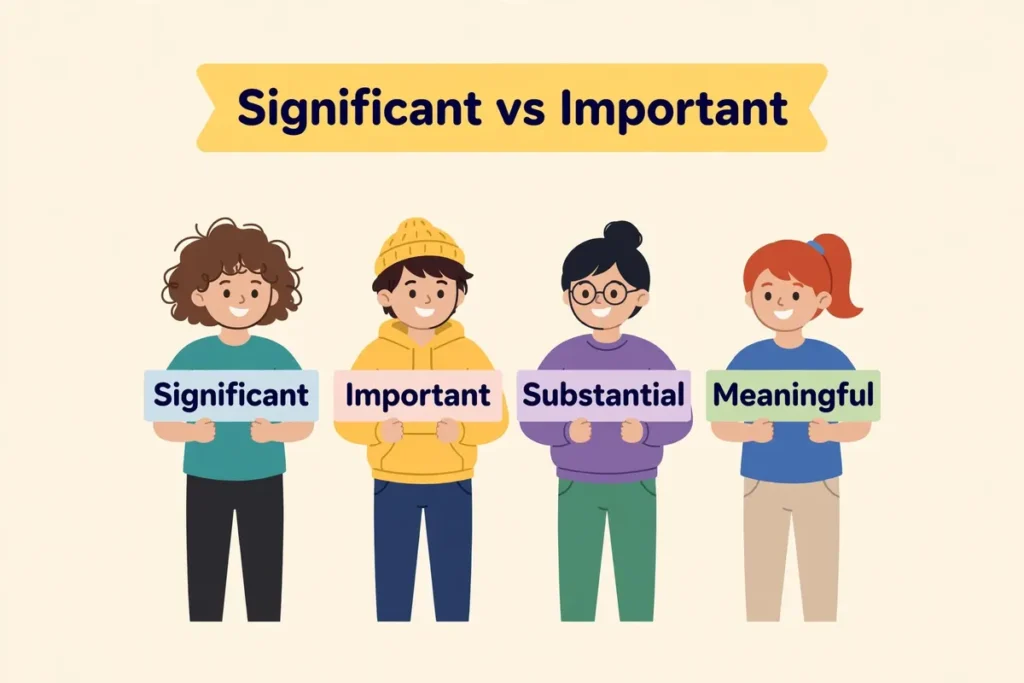
These four words overlap, but each stresses a different idea. Choosing the right one helps readers understand whether you’re describing value, amount, or meaning.
| Word | Core idea | What it stresses | Example |
|---|---|---|---|
| Significant | Important enough to have an effect or to be noticed | Effect, size or meaning, the general word | The new law made a significant difference to small firms. |
| Important | Having great value or effect | Value, it matters to someone | The new law is important for small firms. |
| Substantial | Large in amount, degree or value | Size, it can be measured | The new law brought a substantial rise in costs. |
| Meaningful | Having purpose, value or clear meaning | Meaning, it matters personally | The new law brought meaningful change to her family. |
If it matters, say important; if it can be measured, say substantial; if it carries a message, say meaningful; if you mean all three at once, significant is the right word, but a number is better still.
Significant vs major
Major adds scale. A major problem is a big one, not simply a problem that deserves attention.
Significant vs notable
Notable means worth noticing. Something notable doesn’t have to change the course of events or have lasting effects.
Significant vs crucial and vital
Crucial and vital are stronger. They mean essential, not just important, so use them when success or safety depends on something.

Other Ways to Say a Significant …
Sometimes a complete phrase sounds more natural than a single adjective. These six expressions offer different levels of formality and emphasis.
1. Of great importance
This is a formal phrase for something with considerable value or effect.
Example: Protecting customer information is a matter of great importance to the company.
2. Worth noting
Use this everyday phrase when a detail deserves attention.
Example: One point worth noting is that the results changed after the second test.
3. A major turning point
This phrase describes an event that changes the direction of a situation.
Example: The new agreement became a major turning point in the negotiations.
4. Of note
Of note is a short, formal way to introduce something worth mentioning.
Example: Two findings of note appeared in the final report.
5. A big deal
Tone: Informal
A big deal is a casual expression for something that matters a lot to someone. Avoid it in essays and formal reports.
Example: Winning the championship was a big deal for the small school.
6. A game changer
Tone: Informal and overused
A game changer describes something that changes how things work. Use it only when the change is real, not for an ordinary improvement.
Example: The new payment system was a game changer for the small business.
Antonyms of Significant
The opposite of significant depends on the sense. A word that describes something unimportant won’t necessarily work for a small amount or something without meaning.
Here are the opposites grouped by use.
Opposites for importance
- Insignificant: Not important enough to deserve attention.
- Unimportant: Having little value or effect.
- Minor: Small in importance, scale, or seriousness.
- Trivial: Too unimportant to deserve much attention.
- Inconsequential: Having little or no effect on what happens.
Opposites for amount
- Negligible: So small that it can almost be ignored.
- Slight: Small in degree or amount.
- Minimal: The smallest amount needed or possible.
Opposites for meaning
- Meaningless: Having no clear meaning or purpose.
- Empty: Lacking meaning, feeling, or substance.
Other ways to express the opposite
Of no consequence is a useful phrase for something that has little or no effect.
Insignificant is the single closest opposite overall, but it doesn’t cover every sense. For example, use negligible for a tiny amount and meaningless for something that carries no message.
In statistics, don’t treat insignificant as a simple synonym for a result that lacks real-world importance. The technical interpretation depends on the test and its evidence.
FAQs
Frequently Asked Questions
1. What is the closest synonym for significant?
Important is the closest general synonym because it describes value or effect. However, when significant refers to a large amount, substantial is a better choice. Always check the sentence before choosing a replacement.
2. What is a stronger word than significant?
Momentous, crucial, and vital suggest greater importance than significant. Momentous suits history-changing events, while crucial and vital describe things necessary for success or safety. Use these words only when the situation truly justifies them.
3. What is the difference between significant and important?
Important describes value or effect, while significant has additional meanings related to amount and special meaning. Significant is the wider word, so important is often the clearer choice when describing something that matters.
4. What does statistically significant mean?
Statistically significant means a research result is unlikely to be due to chance under the statistical test, often using p ≤ 0.05. It doesn’t show whether the finding matters in real life or has a large effect.
5. What is the opposite of significant?
Insignificant is the closest general opposite. Minor and trivial describe low importance, negligible describes a tiny amount, and meaningless describes something without a clear message. The best opposite depends on the intended sense.
6. What is a formal synonym for significant?
Material works for business and legal facts that could affect a decision. Consequential suits decisions with important results, while momentous describes history-making events. Choose the word that matches the situation rather than formality alone.